As a mum, I really struggle to typecast myself. Like where on the brand-spectrum am I? Crunchy, wellness mommy? Sometimes, not really. Homemade everything? Sure, if I have the time. School or homeschool? It depends. Conservative liberal middle left right head shoulders knees toes.
I’ve had a bit of everything in my own life too. I’ve homeschooled a little and school-schooled a little. I went to a bougie, expensive private school, and then spent six years commuting by train to a regular college, and did a fully-funded post-grad degree at a government institute. I haven’t been able to pick a lane for myself, especially now as a mum.
It got a bit tricky when I had to think about sending my daughter to school but luckily, I live in a relatively small town with fewer options. I didn’t have to “do my research.” or read up extensively on pedagogy. I didn’t bookmark a bunch of reels, which is the 2026 version of “doing research” anyway.
I just spoke to two mums whose judgment I trust, went and looked at the place, talked to the teachers, and signed up. That was it. That’s how my daughter ended up in the Montessori system.
Last Saturday at her school, we had a parent orientation where I got to learn a little more about their approach and see how they run things. We spent the whole morning inside the children’s house. That’s what they call it, a children’s house.

Everything in there is built for a small person to use without any help. It’s the opposite of child-proofing where you hide everything away up high. Here it’s all down at kid level and out in the open.

There are low shelves, tiny objects sized for little hands, a mini cleaning kit, a little station to wash and dry dishes, a kid-sized linen area for the napkins.
There are SO many trinkets and things that I was going crazy. Everywhere you looked, there was something to fidget with.

From what I gathered, every single thing has a reason to be there. It was placed so that a child can do a whole task, start to finish, by themselves.

The heart of it is this: help me to help myself. A child mostly wants to be set up to do things for themselves. If you have one, you already know this.
The place works like a small society. Up to the age of six it’s literally called a Children’s House. It’s a household the children run amongst themselves with adult guidance. They water the plants, wipe and lay the tables, set flowers for lunch time, polish shoes, clean the windows, prep some basic food, and clean up after themselves.
There’s only one of each thing. So if another kid is using the thing you want, you wait, and you come back to it, which is how they figure out that other people’s work counts just as much as yours. None of this is wildly radical, and anyone who’s homeschooled kids of this age probably has a similar system at home.
It’s just a fairly unusual way to run an actual school.

The classrooms are mixed-age, two- and three-year-olds in with six-year-olds, the older ones looking after the younger, showing them where things go and how to move around the space. “We’re their buddy,” my daughter told me.
Kids are supposed to move from “help me to help myself”, to “how can I be of help?” There are Montessori designed environments for every stage of childhood, right up to a plan for older teenagers who run a small working community of their own, growing food, keeping accounts, making and selling things. You make people capable, and then you give them a community to be capable inside.

The Montessori system was founded by an antifascist who was exiled from her country and had her books burned? What?
Today you think of Montessori and maybe you picture beige, wooden toys and furniture. Or expensive school fees.

But the lady who started it, Maria Montessori, was quite a polarising figure. She was one of the first women doctors in Italy. She built her method after working with the children that the government didn’t want to educate. These kids were in institutions either because they had a disability or they were poor.
She figured that they could learn far more than anyone assumed once they had the right materials and a space actually designed for them. Her kids started doing really well. Word spread, the number of schools grew, and the Italian government was so pleased it started funding her to open even more.
Btw when I say Italian government, I’m talking about Fascism’s first and final boss Benito here.

Sorry, wrong Benito.

Mussolini liked how orderly and disciplined these little child-societies were. He wanted Montessori schools folded into the Fascist youth movement, and he decided that the teachers should take an oath of loyalty to Fascism.
Maria refused, on both counts. It took a few years for things to fully go south, but eventually the regime shut down every Montessori school in Italy. The Nazis were burning her books.
Tantrums were being thrown all around.

By now, she was nearly 70 years old. She was invited to run a 3 month teacher training course in Madras, which was still under British rule at the time. And she got stuck there pandemic-2020-style because her home country Italy had entered World War II.
Since Italy was considered an enemy by the British, they kept her in India for seven whole years, confined only to a few places where she was allowed to teach. Most of that happened in the hill town of Kodaikanal.
She trained hundreds of Indian teachers. It’s a large part of why Montessori education has such deep roots in India today.
All of these experiences fed straight into how she thought about peace. Her whole argument was that peace isn’t something governments hand down in treaties, it’s built in how you raise your children.
“Establishing lasting peace is the work of education,” she wrote.
A society that trains its children to blindly obey and not build the capacity to THINK should NOT act shocked when those children turn into adults who follow orders from whoever barks at them the loudest.
Montessori now, for people like me, is an aspirational parenting choice, and we’ve mostly forgotten that someone once fought a real political fight to protect a child’s right to question things and think for themselves.
How you educate a child is never neutral. It’s always a decision about the kind of adult and the kind of citizen you’re building. That’s why they come for the schools and for young people first. Especially the fascists, because nothing threatens them like a person who can think.
What’s happening in India
As I sat on tiny little chairs listening to a seminar on education and raising independent kids, there were protests all over the country centered around students, systems, and accountability.
They started over a single exam, but as things seem to be progressing, it’s turning into something much larger.
Brief backstory for my readers outside the country: NEET is the national entrance exam for medical colleges in India. Becoming a doctor or dentist here runs almost entirely through this one test.
Over two million students take this exam every year, most after a year or two of full-time coaching that their families save for, borrow for, sell their gold for, and usually move cities for.
On 3 May 2026, about 2.27 million students took it. Nine days later the National Testing Agency (NTA) cancelled the whole thing, because a leaked paper had matched the real one, effectively meaning that all those kids would have to retake the test since the earlier scores were void.
The word “leak” makes it sound accidental, but it wasn’t. A copy of the paper was written out by hand, scanned, passed around on WhatsApp and Telegram, and sold to families for up to 10L a candidate. So students who had paid for the questions in advance sat the same exam as students who hadn’t, and the NTA’s first move was to deny there had been any leak at all.
Almost exactly the same thing happened in 2024. The Supreme Court agreed a leak had occurred but decided it wasn’t widespread enough to justify making everyone sit for the test again, so a small batch of results was scrapped and the rest were fine. There was an investigation, there were arrests, and then it just went away. Nothing about the system actually changed, and two years later here we are again, except worse.
Exam-linked student suicides have gone from a handful in 2021 to more than thirty in 2025, and at least fourteen in 2026 so far. Several of them in the days right after the announcement that their test results were effectively useless.
One was a seventeen-year-old boy in Curtorim, about half an hour from where I live. He was preparing for his entrance exams in Margaon. His dad is a railway guard, and he found him after work.
Akanksha Chaturvedi was eighteen. Her family had moved from a village in Madhya Pradesh to Nagpur for her coaching. Her father worked as a farmer on a small plot and as a cook to pay the fees. She’d expected to score well. She died days after the announcement, leaving a note that she couldn’t face doing it all again.
Umesh Mali was twenty-two. This was his third attempt at the exam, and the only one he felt confident about.
Now obviously there’s much to be said about mental health, and about the pressure these students live under, the years of coaching, the one-shot stakes, the weight of a whole family’s hopes riding on a single result. To all of that, I say yes, BUT–––
This is a systemic problem, and it cannot be turned into an individual one because that’s what usually follows a tragedy like this. When something is screwed up at the level of a system, it gets retold as a story about the lack of personal responsibility.
People struggle under impossible workloads and get told to try meditation. Families sink under debt and get lectured about budgeting. And when students are crushed by an exam system that was rigged against them, the conversation moves to their lack of resilience and coping. It’s not about whether the students failed for crying out loud!!! The system failed, and there is a clear chain of responsibility.
Running a secure, fair entrance exam is not a huge ask. It’s literally THE ONLY JOB of the National Testing Agency, and it’s funded by your money and my money to do that job. It failed in 2024, failed again in 2026, and nobody was held accountable. We’re allowed to be annoyed about that.
So how did a cancelled exam turn into a nationwide movement? I think it was caught up in a perfect storm.
- In May, there was a court hearing where the Chief Justice of India, Surya Kant, called unemployed young people and activists “cockroaches.”
- A comms strategist (Abhijeet Dipke) took the insult and ran with it. He started a satirical online page called the Cockroach Janta Party, a pun on the ruling BJP, and inviting every cockroach to sign up.
- At first it was basically a joke, somewhere a whole generation of burnt-out, unemployed young Indians could gather and be angry together. Within days it had millions of followers.
- The ongoing NEET crap-show gave them something specific to aim at. The movement latched onto the rigged exam, the leaks, and the wider sense that the machinery meant to give young people a fair shot at a better life through education was broken and answerable to no one.
- From there it kept widening. Student unions joined, then the opposing political parties started talking about it, until it wasn’t about one exam anymore but about the whole system.
- But even then, it was still not mainstream until Sonam Wangchuk joined. That upped the stakes massively.
TL;DR on Sonam:
He’s an engineer and education reformer who has spent his whole life building some version of an advanced, high-science Montessori in the mountains of Ladakh. It’s called SECMOL, a school for the Ladakhi kids who the system had failed. The ones who’d flunked their boards and been written off.

The campus runs entirely on sunlight, the buildings are made of solar-heated mud, and the students manage the place themselves. They elect a government, vote on the rules, cook, keep the accounts, host visitors, grow their own food, and learn science and management by keeping their own tiny economy going.
Now like I said, Sonam Wangchuk upped the stakes by going on hunger strike for the students until the government agreed to a dialogue. As of 22nd July, he has been fasting for over three weeks. There has been no dialogue. Instead, the police forcibly moved him from the protest site to a hospital, saying it was on medical advice and court orders.
Last Monday, 20 July, thousands of students marched toward Parliament in a demonstration they called Sansad Chalo, asking for a few things: that the education minister resign, that the families of the students who died be compensated, that Wangchuk be released.
This peaceful protest turned chaotic. Police fired tear gas and used physical force. Protesters have been detained and arrested. If you’re on any social media at all right now, you’ve probably already seen the footage.
Walking to the seat of government to be heard is one of the most ordinary things people do in a working democracy, and in India it’s a constitutional right. We have the freedom to speak and to assemble peacefully without arms.
In fact, Delhi has a designated place for exactly this. Jantar Mantar, where all of this has been taking place, is only a short walk from Parliament, and since the early 1990s it has effectively been the capital’s protest venue. Nearly every major modern movement has started there. Anna Hazare’s anti-corruption campaign, the protests after the Delhi gang-rape case, farmers, workers, students.
This type of thing happens in ALL democracies. The Civil Rights movement in the US had hundreds of thousands of people marching on Washington, in plain sight of Congress, to demand equal rights for all races.
In London, the British government has explicitly committed to protecting the right to non-violent protest around Parliament. Parliament Square, directly across from the building, has been a demonstrators’ gathering point for decades.
The entire point of a protest is to be seen by the people in power, and nowhere is more visible than their own doorstep. Every working democracy has HAD to make room for people to gather and say out loud: this is wrong, fix it.
Sure, none of it was convenient for the government of the day, but almost all of it was allowed to happen anyway because a government that’s confident in its own legitimacy can survive being told it got something wrong.
It should be able to survive being criticised by teenagers. What you’re watching in India right now is a government that can’t. So it does what people who only know how to obey but not how to think do: it uses violence. That’s cowardice. They’re scared of dissent, so they beat it.
Remember Bad Benito? Fascism’s first and final boss, the man who shut the schools? He jailed people relentlessly, shut down the free press, and dragged Italy into a war that killed hundreds of thousands of its own people. And the people who supported him and cheered him on and made excuses for the violence, and told themselves he was fixing the country. It didn’t end well for them either.
Because what fascism sells you is a lie. “Believe, obey, fight” was the slogan. His critics even invented a word for what he was building: totalitarianism. Meaning total control over everything. The government, the economy, the schools, the police, the courts, the army. And in the end all that control produced the opposite of order.
The fascist state lost its grip on the country. There was robbery, looting, lynchings, armed gangs running whole districts. People formed their own patrols because no one came to protect them. Fascism doesn’t run on discipline. It runs on violence, and violence never stops where you want it to.
Ask Benito. Oh wait you can’t. In 1945 his own countrymen shot him and hung his body upside down in a public square in Milan. Bad bunny. Sad bunny.
You don’t have to be a family whose whole future rides on NEET. You don’t have to admire Sonam Wangchuk. You don’t need to think a hunger strike is a good idea, or want anything to do with a party named after an insect, run by some random guy from Boston.
Forget all that for a moment and consider this: a system that millions of children depend on should be run properly, and when it fails this badly, someone in charge should answer for it. That isn’t a radical thing to want.
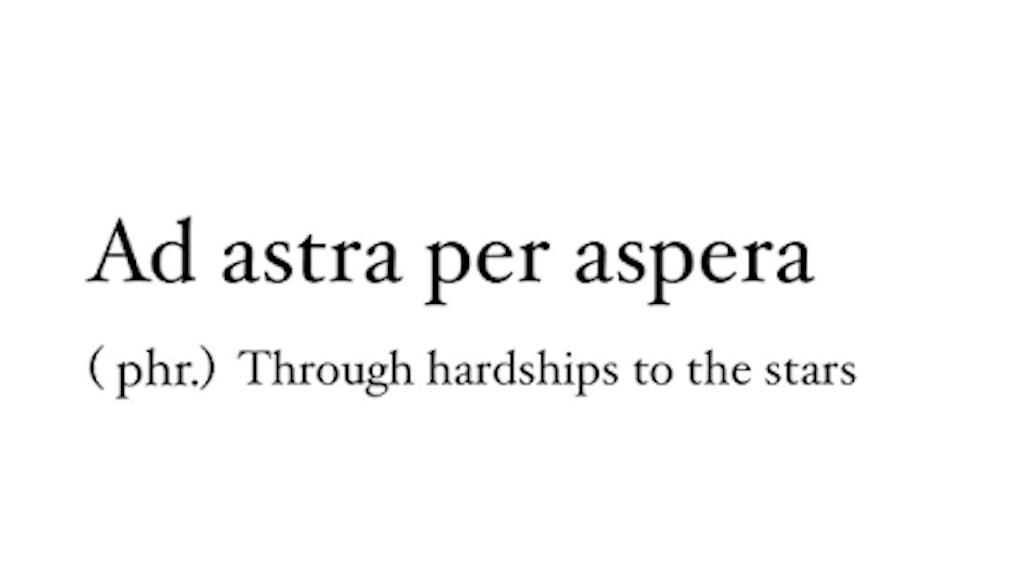
Through hardships to the stars
You might reasonably ask: Why this? Out of everything that’s happened, why is this fight pulling in so much energy right now?
India has no shortage of bigger, older wounds. More than a hundred and fifty THOUSAND people die on our crappy roads every year. Farmers have been dying by suicide for three decades. Well over TEN THOUSAND of them, worn down by debt and failing policies. It makes me sad that we’ve learnt to just live beside those issues.
Like I said, this showed up in a perfect storm, and sometimes there’s no clear reason why something takes off when it does.
I know my readers are almost entirely people like me, and most of this isn’t our story. We’ve had an English education, part of it foreign. We’ve got options, second chances, third chances, money to fall back on, networks that open doors. If my daughter never cleared a single Indian entrance exam, she’d almost certainly be fine. The boy in Curtorim was sold the dream of upward mobility for his family through this ONE path, and the people in charge screwed it up.
On Saturday I learned the order of the Montessori method. First you learn to do things for yourself, and then the question becomes how you help others. That’s the right order for us too.
The instinct, especially online, is to think we can fix everything by doing our part, and then we get disillusioned and burnt out when it doesn’t work. I find it easier to start close to home, or at home.
Maria Montessori rebuilt her whole life’s work this way. After being exiled, having her schools shut and her books burned, she started again at seventy in a hall in Madras with one training course at a time. Her belief was that you change a society by changing how it treats its children. I think it’s a decent model for the rest of us.
I want to write properly another time about online advocacy and how I think it can actually work. But for now, remember that nothing here is getting built or burned down in a day. Endless scrolling won’t change that. Be careful with content that exists only to spark outrage, because a steady diet of that really wears you down. Don’t waste your life in comment sections. This is a long road.
There’s an old Latin phrase I love, ad astra. It means “to the stars.” That’s the short version. The full one is per aspera ad astra, “through hardships to the stars.”
There are no stars without hardship first. There’s no shortcut to a fairer country and no version where you wake up and someone has fixed it for you. It takes years of slow and boring and often failing work, done by people who mostly won’t be thanked for it.
Loving your country means wanting it to be better. The people asking hard questions, or going without food to make a point, care about India enough to want more from it. Never forget where all this anger comes from. It comes from love.
I don’t know if my generation, or the proverbial cockroaches or whoever will fix any of this, or if we’ll just burn out trying. But I’m glad that as parents, at least we get to shape how the next generation is raised. There is nothing with higher stakes than that. Children are the most valuable thing a country has. They are its whole future.
So that’s where I’m starting. At home.
Ad astra.
Leave a Reply