
To my precious girls, guys, and gargoyles,
I present to you my first essay on love.
Or at least, the first one where love takes center stage instead of chilling in the background. I’m excited to share it, and the timing feels perfect.
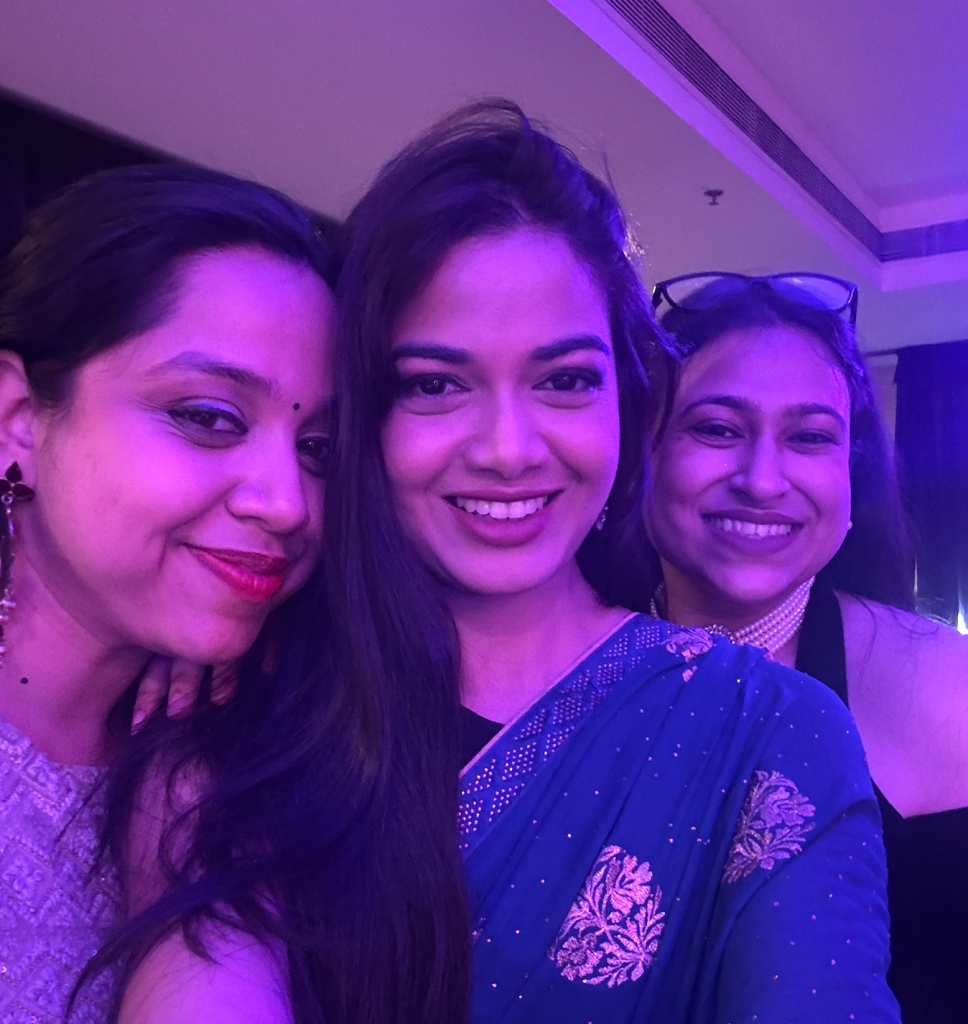
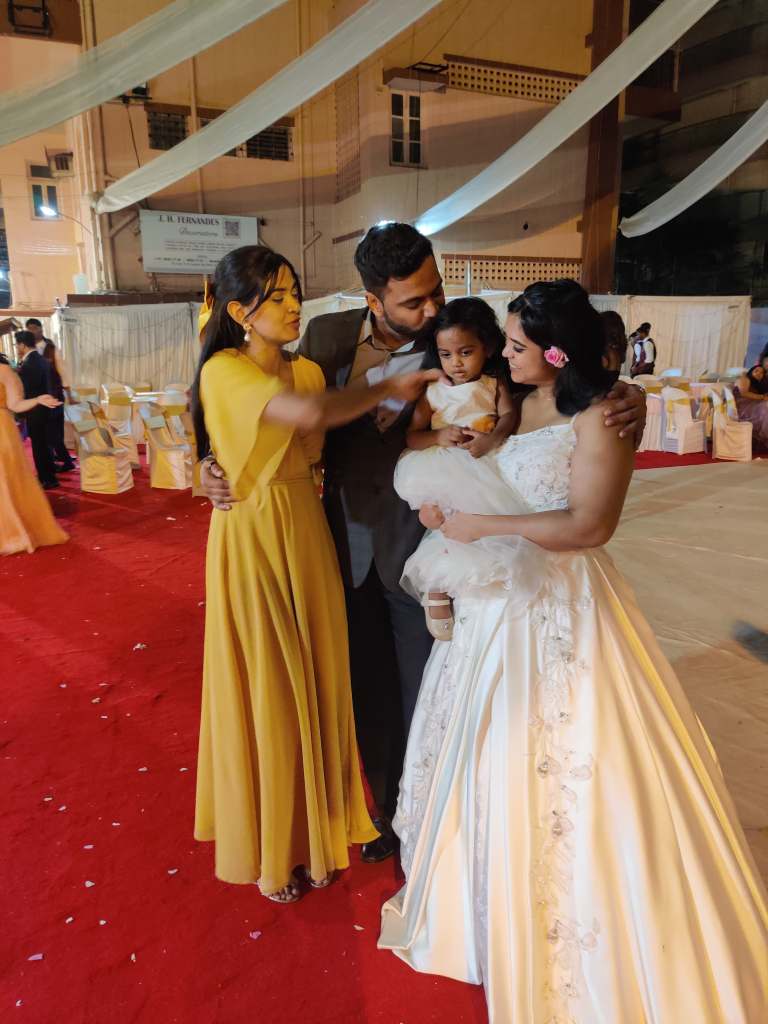
January brought two occasions that got me thinking deeply about love. First, I attended one of my closest friend’s weddings. It was a beautiful two-weekend celebration that brought together so many people I cherish.
Between the ceremonies and moments with old friends, my heart felt completely overflowing and overwhelmed with love. What a gift it is to have friends to cherish.
Then came my own milestone: Five years of marriage. We had the chance to enjoy a little anniversary getaway, and you know how when you’re very enthusiastic about something and the other person matches your level of enthusiasm? That’s how it was. The sweetest experience.

So that’s why, as an overthinker and debrief enthusiast, I wanted to write about love. But I didn’t know how to do it.
Do I just gush about how wholesome love is? How incredible it is to build a life with someone and then live that out everyday? How beautiful it is to grow with people that have been a part of your life for decades? How nice it is to hold hands with your friends and cry happy tears of joy? Or how happy it makes me to wake up and see my best friend’s face in the morning?
That would be insufferable. No.
So instead of writing, I went about my life –– working, meeting friends, and reading countless storybooks to my daughter. She has the most wonderful collection, every single book is a gift from people we love.
At this point, we could probably open a small library, or at least a very niche bookstore specializing in stories about determined mice and vegetables with feelings.
And while searching for new stories to add to her collection, I found one that has now been on my mind for weeks.
In this essay, I’m going to tell you that story.
It’s called The Velveteen Rabbit
By Margery Williams.
(All the illustrations in here are by Komako Sakai)
Let’s begin. (this is my telling of the story, not the whole thing, I’ve put the link to the full story at the end)
One Christmas morning, a little boy woke up to find a beautiful velvet rabbit tucked into his stocking. The Rabbit was soft and plush, with brown and white spotted fur. He had thread whiskers, and ears lined with pink satin.

The Rabbit looked around the nursery and felt pretty smug. He looked better than all the other toys –– there were mechanical toys that were broken, wooden toys with missing parts, and some very old toys that looked worn and shabby.
The Boy was so excited to play with the rabbit, but soon after, all his aunts and uncles came to dinner. They brought with them a lot of presents, and just like that, the velvet rabbit was forgotten.
He was placed on a shelf next to some other toys, and spent months there, largely ignored by the Boy. During these quiet nights, he formed an unlikely friendship with an old horse. Horse was the oldest toy in the nursery.

You could tell he used to be a handsome fellow, but now, he was almost hairless. His fur had fallen off, and his tail was coming loose. But Horse knew things the other toys didn’t.
One night, the rabbit asked the horse a question that changed everything:
“What is Real?” asked the Rabbit, when they were lying side by side near the nursery.
“Real isn’t how you are made,” said the Horse. “It’s a thing that happens to you. When a child loves you for a long, long time, not just to play with, but REALLY loves you, then you become Real.”
“Does it hurt?” asked the Rabbit.
“Sometimes,” said the Horse, for he was always truthful. “When you are Real you don’t mind being hurt.”
“Does it happen all at once, like when you wind up a toy,” he asked, “or bit by bit?”
“It doesn’t happen all at once,” said the Horse. “You become. It takes a long time. That’s why it doesn’t happen often to people who break easily, or have sharp edges, or who have to be carefully kept.”

“Generally, by the time you are Real, most of your hair has been loved off, and your eyes drop out and you get loose in the joints and very shabby.
But these things don’t matter at all, because once you are Real you can’t be ugly, except to people who don’t understand.”
The rabbit took all this in, and sighed. He knew it would be a long, long time before this thing called ‘Real’ happened to him. But he wanted, SO BADLY, to be Real. Yet, the idea of becoming shabby and worn out made him sad. He wished he could be Real without having to change at all.
And one day, he got his chance.
It was bedtime for the little Boy, and Nana, who was putting him to bed, couldn’t find the dog he usually held onto while sleeping. So instead, she grabbed the Rabbit from the floor and tucked him into bed with the Boy.

That night changed everything. The Boy cuddled the Rabbit, and for the first time, the Rabbit felt alive. It felt something like being Real.
He quickly became the favorite toy of the lot. The Boy used to talk to him, and made nice tunnels for him under the bedsheets. He said they were like the burrows that the real rabbits lived in.

And they had splendid games together when Nana had gone away to her supper and left the night-light on.
When the Boy dropped off to sleep, the Rabbit would snuggle down close under his little warm chin and dream, with the Boy’s hands held close round him all night long.
Spring turned to summer, and as the Boy’s love grew stronger, the Rabbit’s began to change. His velvet fur became worn and matted, his tail became unsewn, and his pink nose got rubbed until it barely looked pink at all.

His joints grew loose, and some of his whiskers fell out. But the Boy didn’t mind –– to him, the Rabbit was perfect.
Weeks passed, and the little Rabbit grew very old and shabby, but the Boy loved him just as much. He loved him so hard that he loved all his whiskers off, and the pink lining to his ears turned grey, and his brown spots faded.
He even began to lose his shape, and he barely looked like a rabbit any more, except to the Boy.
The Rabbit didn’t mind how he looked to other people, because he finally got what he wanted. He was Real, and when you’re Real shabbiness doesn’t matter.
Life was perfect, until disaster struck.
The Boy fell ill with scarlet fever. His little body was so hot that it burned the Rabbit when he held him close. Through long nights of fever and chills, the Rabbit never left his side.

The little Rabbit found it quite dull with nothing to do all day long, but he snuggled down patiently, and looked forward to the time when the Boy would be well again.
When the Boy finally began to recover, the doctor ordered that all the toys and books he’d played with during his illness must be burned to prevent the spread of infection.
This included the Rabbit.

The nurse carried Rabbit out to the garden, and placed him in a sack with old picture books and toys, waiting for the gardener to burn them. As the rabbit lay there, he felt quite uncomfortable. He was used to being snuggled by the little Boy.

At that moment, he thought of the Horse, so wise and gentle. He remembered all that he had told him. But what use was it to be loved and lose one’s beauty and become Real –– if it all ended like this?
And a tear, a real tear, trickled down his little shabby velvet nose and fell to the ground.
Suddenly, something strange happened. Where the tear fell, a flower grew, and out from this flower stepped a Fairy.
The Fairy explained that she takes care of all the toys that have been Real to children. Because the Rabbit had become Real through the Boy’s love, she would make him Real to everyone.
With a wave of her wand, she transformed him into a living rabbit, with real fur and working legs, a twitching nose and all. She welcomed him to join the other rabbits in the garden.

“Run and play, little Rabbit!” she said. And so he did.
The next spring, the Boy, now recovered, was playing in the garden when he saw a strange wild rabbit. Something about it reminded him of his old friend.
But the little Boy didn’t know it was actually his beloved toy, now transformed into a real, living creature. The Rabbit, however, remembered everything. He twitched his nose at the boy, and in that brief connection, the rabbit felt all the old love surge through him.
He gave one last look at the Boy who had taught him what it meant to be Real, then bounded away through the ferns to join his rabbit friends. Some magic, he realized, was meant to be carried silently in the heart.
The Boy would sometimes see him after that, playing in the garden with the other wild rabbits. And though he never knew it was his own precious friend, somehow seeing this particular wild rabbit always made him feel happy. As if he was remembering a love that had shaped him long before he understood what love could do.

The End.
I’ve been thinking about the love that this story talks about. The subtle wearing away that happens when we let ourselves be loved. The Rabbit discovered what I’m only now beginning to understand: That to be loved is to be slowly unmade.
The most generous thing we can offer another person is our complete attention. But there’s a real terror in receiving that gift ourselves –– in being truly seen, witnessed in our entirety. To be the object of such focused attention is to feel yourself being slowly eroded, your careful constructions crumbling under that steady gaze.
The reason this story hit home for me was because I spent my whole life being adept at avoiding this wearing away. I used to find more subtle ways to maintain my distance, and to keep my edges sharp and defined.
I had perfected the art of intimate conversation that never quite reached the tender places. I was living on the shelf –– admired but untouched and unknown, pristine but not quite Real.
To be really loved is to learn who you really are.
When we meet new people, we choose which parts of ourselves to show, which stories to tell, and which flaws to acknowledge. But real friendship has a way of seeping through these careful boundaries, and finding all the places where our presentation doesn’t quite match reality.
I think of the friends who came together for the wedding earlier this month. These are the people that dragged me into the scary, beautiful Real. Not through force, but through presence. And I became Real through a thousand small moments of being known, being seen, being changed by the seeing. It’s amazing what the accumulated weight of being witnessed over time can do for you.
My friends and I have watched each other become, unbecome, and become again. The steady erosion of our careful facades happened so gradually we hardly noticed it.
It’s uncomfortable, this wearing away. And my default response to it is resistance. I instinctively brace myself against the wearing effects of love. But I’m learning to trust this erosion, to see it not as loss but as revelation.
There’s something compelling about these worn-away places, these spots where love has done its work.
I think that’s why I now cherish intimacy in friendships –– not the careful exchange of confidences and secrets, but the courage to let ourselves be worn away by love’s persistent attention. To trust that what emerges through this erosion might be more true than what we started with, even if it’s less perfect.
Deep beauty is only seen with loving eyes.
There’s something weirdly thrilling about asking someone what they first thought of you. It scratches a particular vanity itch –– the desire to know how you appear before your edges start wearing down.
In the early days of dating, Kyle and I used to trade those stories like precious gems –– how your smile caught my attention. How I loved the way you carried yourself with such certainty. How warm you were towards others. How different you were from what I’d thought.
I still remember this one date so clearly. It was a Friday we’d been looking forward to all week. I’d stuffed a nice outfit in my laptop bag and did that awkward change in the office bathroom after work. We had fancy dinner plans at The Tasting Room, but decided to grab a drink first at Ambiance in Lower Parel.
We got so caught up in talking to each other (about each other) that we completely forgot about dinner. But heck no, we weren’t letting that get in the way. We took a cab to Phoenix Mills, walked straight into Food Hall, and bought boxes of supermarket sushi.
Then, we found a table in there, sat down, and continued our conversation while eating an ungodly number of maki rolls.
We were 22 years old. We were new toys, perfect in our little boxes.
The surface-level beauty that first drew us to each other feels almost childish now. I’m not saying the beauty wasn’t real –– it was. But it was the kind of Real that exists in first impressions, in careful presentations, in the velvet fur of a brand new rabbit.
We’ve now been together for eleven years, and married for five.
He’s seen me lie –– not just to others, but to myself. He’s watched me break promises I swore I would keep. He’s witnessed the gap between who I claim to be and who I am in my weakest moments.
He’s seen me be cruel when I was hurting, inconsistent when it served me, and selfish when I thought no one was looking. The carefully maintained image I presented in those early days has been worn away by time and proximity.
What strikes me is not that we still love each other despite seeing these things, but that somehow, impossibly, the beauty we see now is deeper precisely because of them.
It’s a beauty that exists not in spite of our flaws but somehow through them? If that makes sense. Like light passing through cracked glass creating these rainbow-looking patterns that are more complex than perfect transparency could ever achieve.
I’m not trying to drive home the wonder of unconditional love or the romantic notion that love is blind. It’s almost the opposite –– love sees everything, even the things we try to hide, but it sees them in a context we can’t provide for ourselves.
The Boy in the story didn’t love the Rabbit more when it was new and perfect –– he loved it most when it was worn and Real, when its appearance reflected the history of their connection.
When I look in the mirror or consider myself, I see each flaw in isolation, each failure as a definitive statement about who I am. And sometimes, I feel like he sees them as part of a continuous history, threads in a longer story of becoming.
The beauty that exists between us now isn’t something that can be photographed or described to others very well. This might be my only attempt at it. What I cherish now is the courage it takes to let someone see you fail and try again, to let them love you not for your progress but for your persistence. This isn’t the beauty I dreamed of when we first met.
Especially because it isn’t universally beautiful. It’s beautiful just to us.
Time for some philo-sofia
There’s a guy called Merleau-Ponty. I’m gonna take a gamble and say he’s French. He wrote about this concept called intercorporeality –– it’s the idea that our sense of self isn’t contained within our own skin but emerges through our encounters with others.
When you’ve lived with someone for years or talk to a person all the time, their way of seeing becomes part of how you see.
Even in marriage, perhaps especially in marriage, we have to eventually abandon the fantasy of complete knowledge of another person. There remain parts of each other that feel unknowable, depths that can’t be fully plumbed. And I love that. I love that there will be parts of our partner’s inner world that we can only glimpse.
But Merleau-Ponty’s insight helps us understand why long-term love is so transformative: Your sense of self becomes interwoven with how you’re perceived by someone who knows your shadows and lights.
It’s not just that they see your beauty –– their seeing is what helps call it forth.
Like the Rabbit becoming real through the Boy’s love, we become more fully ourselves through being deeply known and loved by another. Their commitment to witnessing our contradictions, our growth and our failures helps us integrate those parts into a more complete, if still ever-changing, whole.

Growth can really wear you down. Thankfully, we can help each other through it.
You can’t escape this choice forever –– between remaining pristine and becoming Real. Life sometimes has a way of forcing your hand.
After moving cities, becoming a mother, and realizing that so many of my careful strategies for maintaining distance weren’t protecting me from anything worth being protected from.
And so, I found myself at a crossroads when it came to finding people to trust and love with all my heart: I could stay carefully preserved, or risk being known.
I chose the latter.
I’ve found myself making new connections with a kind of reckless honesty that would have terrified me a few years ago. Maybe it’s exhaustion – keeping up appearances takes so much energy. Either way, the amazing thing I’ve discovered is that the heart doesn’t wear out from loving.
Loving doesn’t deplete you. Instead, letting myself be worn smooth by old friendships has somehow made me better at forming new ones. Like a muscle strengthened through use, vulnerability becomes easier with practice.
These new friendships carry their own kind of wow. They don’t have the weight of shared history (they will soon), but they bring the gift of being known in the present tense. And yes, sometimes it backfires. Not everyone wants or is ready for that level of honesty, and not everyone is meant to become someone that shapes you.
But the alternative –– staying safely behind my walls, keeping my edges sharp and clear –– feels increasingly impossible. Like trying to preserve the Velvet Rabbit’s pristine fur at the cost of him never being held.
(Hold meeee)
To wrap up these thoughts, I keep coming back to the way time moves through love, or maybe how love moves through time? The distinction feels important, but I haven’t quite figured out why.
We talk about relationships “standing the test of time” as if time were the antagonist, wearing away at connection until only the strongest survive. But what if time isn’t wearing away at love –– what if it’s just wearing away everything that isn’t love?
The Horse was right about one thing: you can’t become Real if you need to be carefully kept. What he didn’t mention is that once you start becoming Real, you can’t stop. There’s no final form, no moment when you can say ‘there –– now I’m finished.’
All we have is this continuous unfolding, this gentle erosion of everything we thought we needed to protect, but can actually give up. When it comes to love, I think this endless becoming might be the most extraordinary gift of all.
Thank you for reading this essay. If you’d like to read The Velveteen Rabbit, here you go.
And to the precious people in my life who’ve worn my edges smooth, my sharp corners soft, and made me more Real than I ever dared to be –– thank you. I love with all my achy breaky heart.
I’ll be back the next time I have something interesting to say.


 Unfinished Conversations
Leave a reply to menezeslynette Cancel reply