
This week, I’ve been struggling with a weird kind of writer’s block. It’s not the conventional kind where you can’t think of what to say – I have a ton of ideas ready to unpack. Ideas that make it easy for me to fall into a rabbit hole of research and write three thousand words in one casual sitting.
This writer’s block isn’t the overwhelming kind where you have too many ideas and feel paralyzed by the pressure of choice. I think that predicament has a simple solution – pick a thread and pull at it, and let it unravel until it’s a coherent piece of work. Easy peasy.
What’s been messing me up is a somewhat deeper struggle – it’s about one’s worth as a writer and the value of what I’m writing. Or the value of what anyone is writing, really. Over the past month, I’ve been immersing myself in a sea of really great stuff written by really, really, unbelievably talented writers, and I’ve been struck by a recurrent phenomenon – the romanticized idea of the underdog artist.
A bit of context setting here.
I’m not writing about my own experience with rejection. I’m sharing my thoughts on rejection in general, as a creative. This is not really my journey. Yet.
Okay, back to it – The romanticized underdog artist. This trope is undeniably inspiring.
In this narrative, the idea is that rejection isn’t just an obstacle. It’s a badge of honor. We’re supposed to believe that rejection enhances the quality and inherent value of one’s work. Like it’s a crucial stepping stone for an artist on their journey to greatness. Struggle and hardship aren’t hindrances; they are, in fact, elements that lend richness to the narrative of art.
It insinuates that what you create is somehow MORE valuable if it is first dismissed, trashed, and then unexpectedly resuscitated by someone who proclaims, “Hey, this is actually not bad!” and then proceeds to put substantial monetary and promotional support behind it, propelling it into mainstream consciousness.
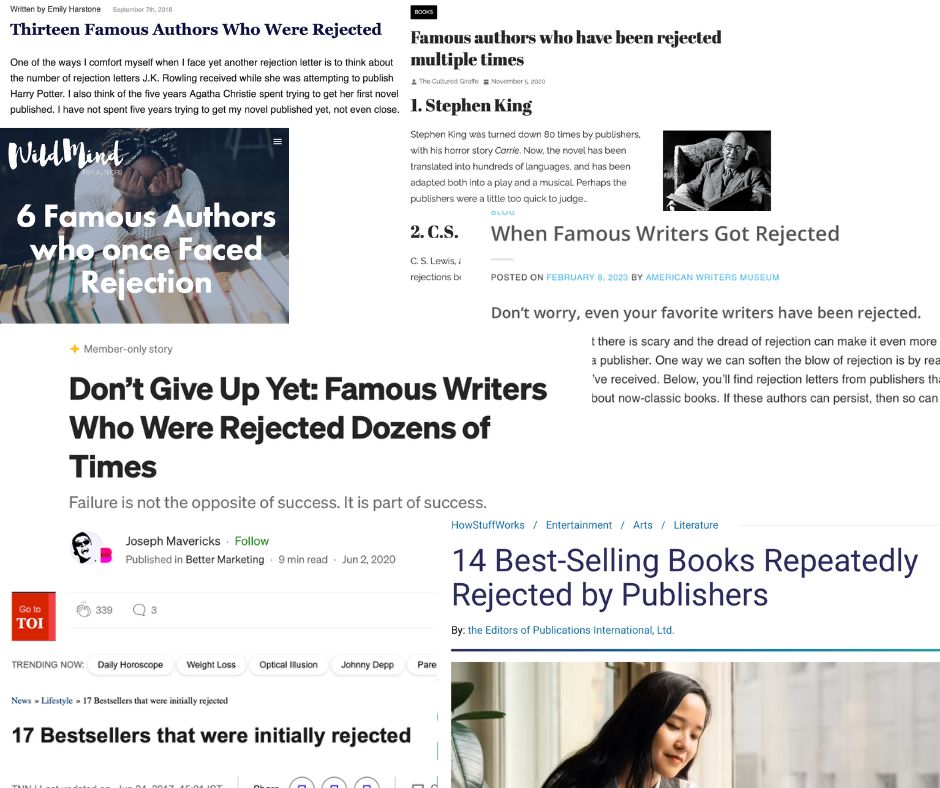
There’s something intrinsically captivating about tales of manuscripts initially noped and yucked by publishers, only to resurface as universally adored classics. It somehow makes us feel better knowing that our favorite novels stood the test of time and were rejected over and over, only to have perseverance win over.
Just so you know, here are books that were initially rejected:
Gone With the Wind by Margaret Mitchell: Rejected by 40 publishers.
Lord of the Flies by William Golding: Rejected by 20 publishers, calling it ‘absurd,’ ‘dull,’ and ‘rubbish.’
C. S. Lewis, author of The Chronicles of Narnia, faced 800 rejections before he got his first book published.
Animal Farm by George Orwell: Publishers apparently called this book ‘dull’ too.
The Diary of a Young Girl by Anne Frank: Rejected 16 times.
Harry Potter and the Sorcerer’s Stone by J.K. Rowling.
The Princess Diaries by Meg Cabot. Meg Cabot kept all the rejection letters she received in a bag under her bed. After three years, the bag was so full and heavy that she couldn’t lift it.
The Jungle Book, The Catcher in the Rye, Little Women (they told her to ‘Stick to your teaching, Miss Alcott. You can’t write.’)
Maybe this is an inspiring message of perseverance to you. If you’re attempting to fight rejection and keep believing in your dreams, if you’re determined to never give up, if you don’t get phased by endless no’s, sure, this is great. We can remind ourselves that failure is not the opposite of success; it’s part of success. These phenomenal authors were rejected and went on to do great stuff.
Good for them. But this isn’t a Ted Talk. I’m not here to inspire anyone today. I’m here to whine and complain. So here’s why this narrative kinda lowkey sucks –
Apart from the fact that the stringent and exhausting journey of rejection probably weeded out many seriously talented authors – consider a novel that made it and one that didn’t, does the difference only come down to the ability of the author to persevere against all odds? To keep banging down every door and obstacle until a combination of luck and foolhardiness make success inevitable? What if they didn’t have the means to do that? What if their mental health didn’t allow it? What if they lacked support?
Are all our cherished authors carved from the same stone as LinkedIn influencers who boast about starting their day with a healthy breakfast of NOs and can stomach endless rejection, wearing it as a badge of honor without losing hope? (no shade to LinkedIn influencers, luv u longtime)
While I definitely appreciate the appeal of an underdog story, this line of thinking harbors a deep flaw. It promotes a skewed system of valuation where a binary system of acceptance or rejection, success or failure, determines art’s worthiness to reach the public. It’s the idea that true art is born from pain and hardship.
This narrative is so potent that, at times, the journey of the artist’s struggle overshadows the actual work of art. This is not merely problematic but potentially damaging, with implications that ripple beyond the sphere of art and reach the creators themselves.
Every book synopsis might as well be: ‘Come read this story that made a fool out of arrogant publishers.’
I have no plans to write a book, but I sure as hell know that I WILL NOT be able to stomach 20 rejections. I’m a 3-rejection chica ––– max to maaaxxx.
So one must ask, what happens to the unpublished masterpieces? What about the works of genius that never got the platform they deserved and the stories that remain buried in the silent shadows of obscurity? I tried Googling ‘What happens to novels that get rejected?’ and all I got was a series of articles on ‘How to NOT get your manuscript rejected.’ Fabulous.
I just hate that the difference between a masterpiece and something that never sees the light of day–something that is absent from our consciousness and discourse–might very well come down to the tenacity of the author rather than the intrinsic quality of the work.
Is it not really upsetting that there are so many unseen casualties in such a system? Am I the only unreasonably upset person right now?
NO I AM NOT.
Because I can’t possibly engage in this chitchat about art, recognition, and the systems of valuation without acknowledging the landmark event that shook the creative world this very year: the Writers Guild of America’s (WGA) strike of 2023. God, I love angry people these days.
If you’ve been living under a rock and don’t know about it, here’s the sitch: The strike was called by writers in response to their demand for fairer remuneration, better working conditions, and a more transparent system for recognizing and crediting their work.
It’s a stark reminder of the crappy realities faced by creatives who, in their quest for artistic excellence, often find themselves grappling with the mundane and somewhat sobering realities of everyday life (aka rejection, bro). Ironically, the writers who have moved us with their stories of triumph, of love, and loss are themselves caught up in a reality not unlike those they write.
This forces us to confront the very questions we’ve been dissecting here: What determines the value of creative work? Should we just send all these writers a list of authors that got rejected 20 times and tell them to toughen up? Considering our love for never-say-die heroic confidence, shouldn’t these bratty writers hunker down and nobly suffer for their art?
Instead, they’re taking a stand, highlighting the struggles that creatives endure far away from the shiny glam of Hollywood premieres and bestselling novel lists. Eww how lame and uninspiring.
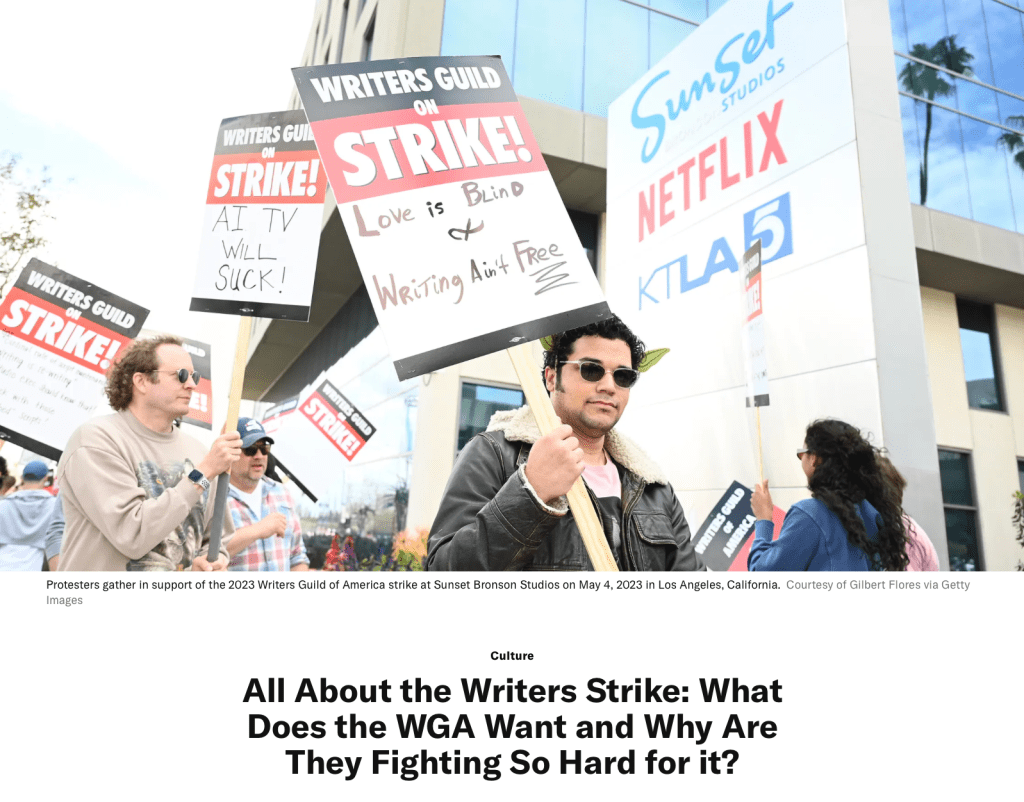
The WGA Writer’s strike is a bold statement against an antiquated system that prizes profitability over people, and the commodification of art over its inherent value. It’s simply a bunch of people asking instead for a more balanced and more equitable dialogue between art and its marketplace and between the artist and the industry – because passion don’t pay the bills, sweetie.
As the strike continues, it compels us to consider a new narrative, one that emphasizes not just the resilience of the artist but also the rights of the artist. It reminds us that behind every tale of perseverance, there is a real human cost.
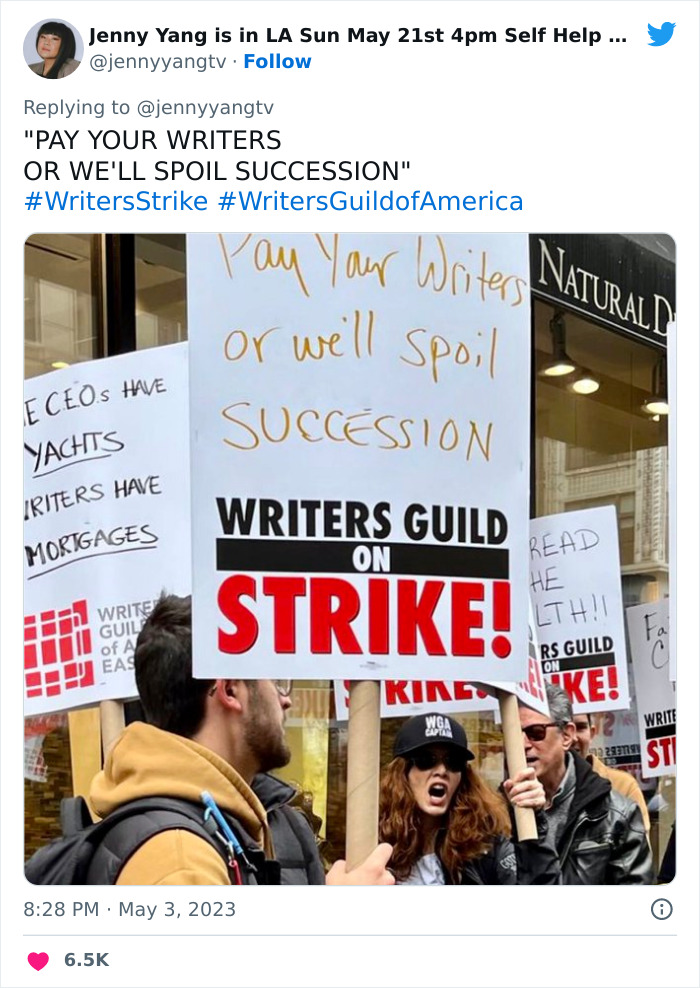
And look, I get it. The underdog artist may serve as an inspiring motivational narrative for many. I’m not saying we shouldn’t acknowledge the struggle and resilience that so many of our favorite authors have demonstrated.
Whether or not we are perceived as underdogs or overdogs(?), the bottom line is that creative work does NOT exist solely for acceptance or rejection. Its raison d’être is far more important. It exists to stir emotions, to challenge norms, to question realities, and to offer solace. It’s a profound act of communion between the creator and the observer, a dialogue that really ought to go beyond the traditional parameters of success and failure.
Imagine if we flipped the script. Instead of the painful journey of an artist clawing their way through rejection, we can celebrate the story of a creative soul daring to dream, daring to create, and daring to believe that their work has intrinsic value. Instead of creatives spending time wallpapering their homes with rejection letters, they can just do what they do best: create.
Because at the end of the day, it’s not about how many times you get knocked down. It’s ALSO DEFINITELY NOT ABOUT HOW MANY TIMES YOU CAN GET BACK UP.
It’s about finally saying, ‘Why the hell is some idiot constantly knocking me down can we please collectively do something about this bulldozer because I for one have had enough!!!!!’


 Unfinished Conversations
Leave a reply to Valencia Aguiar Cancel reply