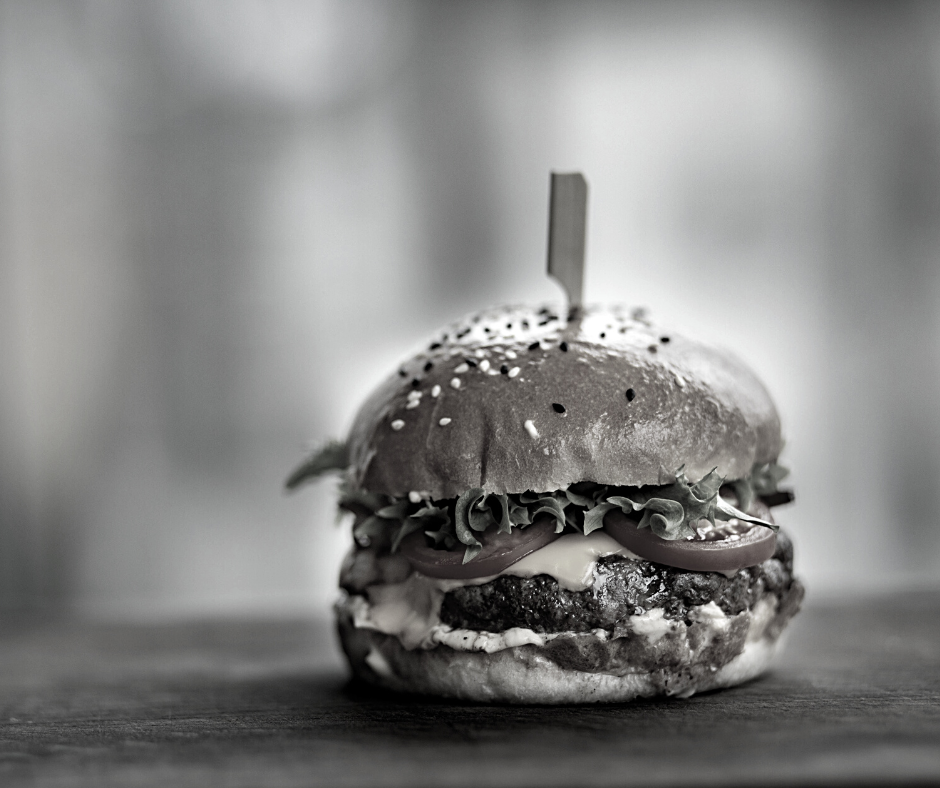
You’ll find a McDonalds at nearly every major airport that you travel to. Nothing special about it, except for the fact that you could get beef burgers there. Not even ‘good’ burgers, just burgers.
But in the years after moving to Bombay, there was nothing more exciting than eating at a McDonald’s that served something other than chicken or fish. In the 2000s and 10s, it wasn’t easy to get your hands on beef burgers. So traveling to another country meant getting to eat ‘real’ stuff.
It became a bit of a travel ritual, started by my brother. Every time we traveled out of the country, we’d make sure to find a McDonald’s or a Burger King at the airport and have a burger there. Usually the ones with a double patty AND bacon in them.
For someone who finds little joy in the default airport experience, this burger quest was a highlight for me. It’s strange how a simple beef patty between buns can transform a crappy layover into something vaguely exciting.
Today, beef burgers are no longer a rare find in Bombay, not to mention you get them practically everywhere in Goa. But if I were to travel abroad, I’d still likely sneak in a burger during my layover. Some rituals aren’t easy to part with.
In history, rituals began as simple, repetitive actions that helped people make sense of their world. Whether through music, dance, or other expressions – these repetitive actions weren’t just performed for their own sake. Rituals provide a sense of connection, a tether to something larger than our individual experiences.
And although rituals evolved, adapted, and responded to the needs of their times, they continue to have a way of grounding us in a world that often feels fleeting and transient. Like burgers at an airport.
Lately, I’ve been thinking about rituals. Our world is in desperate need of some grounding and sanity, and the mere act of bearing witness to some of its turmoil has left me grasping at straws for what it even means to be ‘human’. And so I’ve been thinking about rituals.
Once I left home, got married, and started a family, my own rituals have been an opportunity to reflect on my values and priorities. I don’t have many rituals imposed on me, so to speak, which is why I get to choose the ones I want in my daily life.
Prayer, cooking a good meal every weekend, making time for writing, enjoying a nice cup of coffee every morning.
So what’s the difference between routines and rituals?
Although routines are also repetitive actions, they aren’t necessarily laden with deeper significance or meaning. They’re more about efficiency and structure. Like a morning routine –– waking up at a certain time, having a particular thing for breakfast, exercising –– although these activities might set the tone for our day, they don’t necessarily carry any symbolic weight.
By this definition, is getting a beef burger at the airport a routine? Or a ritual? Is it a tradition? What’s the difference? I don’t quite know.
Like I said, I’m just navigating all these interesting tenets of Being Human and my understanding is constantly evolving. That shouldn’t stop me from writing a couple of thousand words about it, never has in the past.
Okay, time for some made-up definitions:
Rituals
Special things you do that mean more than they seem. They can be just for you or done with others, and they don’t have to be about religion – they can be totally everyday things, too.
A wedding ceremony is a ritual where you do specific things (like exchanging rings) to mark a big life change. They’re a way for people to say, “Hey, this matters to us,” and feel grounded and connected to something bigger.
Routines
Routines are less about deep meaning and more about keeping life from turning into a circus. They’re the daily things you do to help your life look the way you want it to. Routines are the background music – not always noticeable but definitely keeping things in tempo. They give you a sense of control.
Traditions
Traditions are ways to honor the past – that’s why they’re special. From national holidays to family get-togethers, traditions keep a particular story going. Traditions can be marked by rituals too and change with the times. Like, your whole family getting together for Christmas every year, that’s a tradition. And your sister making your mother’s legendary cake recipe where all the kids mix the batter together – maybe that’s a ritual?
I’m so confused.
What’s Common?
- All three – rituals, routines, and traditions – are about doing stuff repeatedly or everyone doing the same thing (e.g. you don’t do a wedding repeatedly but everyone repeats some version of that same thing)
- They give us a sense of belonging, whether it’s to our own daily life, our community, or our cultural heritage.
- You do these things because ‘you’ve always done them.’
What’s Different?
- Rituals are not practical, and they can’t be devoid of emotions. They’re all about the deeper meanings behind what we do.
- Routines are the practical, day-to-day choices we make that keep our lives rolling.
- Traditions are about bringing the past into the present and making sure we carry our history with us.
From what I’ve gathered, I guess a routine can evolve into a ritual when that activity is filled with additional meaning or significance. Growing up, my family had dinner together on most days. Often, we’d be watching American Idol while eating.
But every year when we got our school report cards, we went out for a nice meal. It was an end-of-academic-year type of ritual to celebrate the fact that we got decent grades. So while dinner was routine, it turned into a ritual when it became a dedicated time that everyone set aside for a purpose other than just dinner. The act remains the same, but its significance changes.
On the other hand, rituals can become routines when their symbolic significance diminishes or when they’re performed out of habit rather than intention.
This brings us to the next confounder: Habits.
Oh my God why did I even bring this up, we were perfectly happy with our current level of confusion.
Okay so –
Habits are repetitive actions, like routines and rituals. But unlike routines and rituals, you don’t really ‘decide’ to do them. You don’t actively think about those repetitive actions. Your morning routine could include some exercise. Your morning ritual could be some time of prayer. But your morning habit might be checking your phone as soon as your eyes open.
Both habits and routines are regular and repeated actions, but habits happen with far less conscious thought, whereas routines require a higher degree of intention and effort. And rituals require even more intention and meaning.
In summary;
- Rituals are done with mindfulness and intention
- Traditions are done with intention and some nostalgia
- Routines are done with some intention (but not as much as the previous two)
- Habits are done subconsciously
The routine-to-habit pipeline
Many books have been written about building better habits and breaking bad ones. The most famous is probably Atomic Habits by James Clear, but other books like The Seven Habits of Highly Effective People by Stephen Covey and The Power of Habits by Charles Duhigg (my personal favorite!) have also sold millions of copies.
It’s fair to say that people are convinced that habits matter – more than traditions and rituals for sure.
According to these books, we consciously choose or decide less than half our actions, most of what we do is on autopilot. This can be great because it frees up our minds for tasks that require more conscious effort – as long as these automatic actions, or habits, are helpful and not harmful.
But most good habits don’t start out as habits. They start as routines.
Take making your bed for example. At first, it’s a decision. You do it because it makes your room look neater, and it’s a small win to start the day. So you do it every day and that’s a routine. It becomes a habit when you start making your bed without even thinking about it. You don’t stand there pondering whether to do it; you just do it.
A habit usually manifests itself as an automatic urge to do something, triggered by a particular cue. The stronger the connection between the cue and the action, the more ‘on autopilot’ the habit is. With enough time, routines can turn into habits, but you need enough repetitions to create that habit loop.
Let’s break it down with our bed-making example:
- Cue: You wake up and see your messy bed. That’s your brain’s signal to start the routine.
- Routine: You fold your blanket and put your bedspread on. That’s the making of the bed.
- Reward: Yay, you’ve been up for only 2 minutes and you’ve already accomplished something. It looks great and feels satisfying.
The routine-to-habit pipeline is all about repetition. That’s what all those books will tell you, along with a hundred other helpful psychology hacks to become the master of your habits. Even if you aren’t a self-help junkie, they’re pretty interesting topics to learn about.
The routine-to-ritual pipeline
I think the difference between a routine and a ritual is the mindset behind the action. While routines can be actions that you like to do or need to be done — such as reading or taking a shower — rituals involve more meaningful practice. More intentionality.
Technically, you can turn pretty much any routine into a ritual by being more mindful and intentional about what you’re doing. There are plenty of articles about eating mindfully and turning meals into rituals. Pay attention to the taste and texture of your food. Truly experiencing your meal.
Mindful eating is supposed to have a ton of benefits, but I can’t tell you about any of those firsthand because eating is just about sustenance for me. I scarf down my meals in between running after a crawling baby.
But all this aside, I’ve been thinking more carefully about what rituals I want to have.
What things do I want to prioritize to make my life more meaningful?
What routines do I want to turn into habits by having them on autopilot?
What routines do I want to turn into rituals by being more intentional?
The beauty of establishing a ritual is that it’s easy. You simply decide to do it, and you don’t even have to tell anyone. You can create a ritual around anything.
I haven’t been able to turn meals into a ritual, but I have been creating a ritual around my daughter’s bath time. It’s how we end the day together, I play fun music and spend a good hour just enjoying that time with her. I try to keep my phone away to minimize distractions. I know these moments won’t last forever, so I’m making the most of them.
While my own bath time is just another part of my day, her bath time has become a special ritual for us.
There are always opportunities for new rituals
The one thing I dislike about the endless optimization of our lives is that we’ve lost out on a lot of rituals and meaningful routines.
When we were kids, we’d accompany my parents on their weekly grocery-shopping trips to Carrefour or Lulu. It was an outing we looked forward to. Now, we order most of our groceries straight to our home and there isn’t as much of a ritual around it: No more making long lists, checking them twice, going hunting for discounts, filling up a cart – none of that.
For most people, stocking up on groceries is much easier today than it has ever been before, with better discounts too. But we’ve lost out on the ritual.
I felt the same way when I visited my grandfather and aunt recently. We sat down for breakfast, and both of them had the newspaper open. I glanced over and saw a bunch of headlines about the turmoil in Gaza. It was mostly stuff I’d seen on Twitter already.
For me, there’s no ritual around reading the news. The news flashes on my screen amidst a barrage of social media posts, devoid of the introspection that comes with sitting down to read the papers. There’s no ritual around it.
I think we might have overoptimized ourselves out of some rituals. I can’t tell if that’s good or bad, but it makes me want to find new rituals. The concept of rituals isn’t lost, but it should evolve.
Like this one, I saw recently called a ‘house cooling’ party. Someone shared a story of her grandparents who were moving out of their home after living there for 45 years. They invited friends and family over and everyone sat together and shared happy memories of their time in that house. That, to me, sounds like a great ritual. A nice way to say goodbye to a space that houses so many special moments, rather than just unceremoniously packing up and leaving.
If the ritual feels right, then try it. It doesn’t have to make sense for everyone.
Rituals can help provide a sanctuary in times of uncertainty. Think about how the pandemic birthed so many new rituals to give people some comfort and a sense of normalcy amid chaos. They provide continuity, grounding us and pointing us to what truly matters.
Whether it’s a ritual as mundane as a burger at the airport or something more significant, rituals can challenge the relentless march of efficiency and progress. In a world that relentlessly pushes for more, faster, and better, they help us figure out: What are we rushing towards? And in our haste, what are we leaving behind?
I’ve stopped worrying too much about what dead or dying rituals I ought to resurrect. I’m focusing now on the new rituals I can create, I’m finding new ways to infuse my life with moments that matter, no matter how small they may seem.
I think I need it now more than ever.
 Unfinished Conversations
Leave a comment