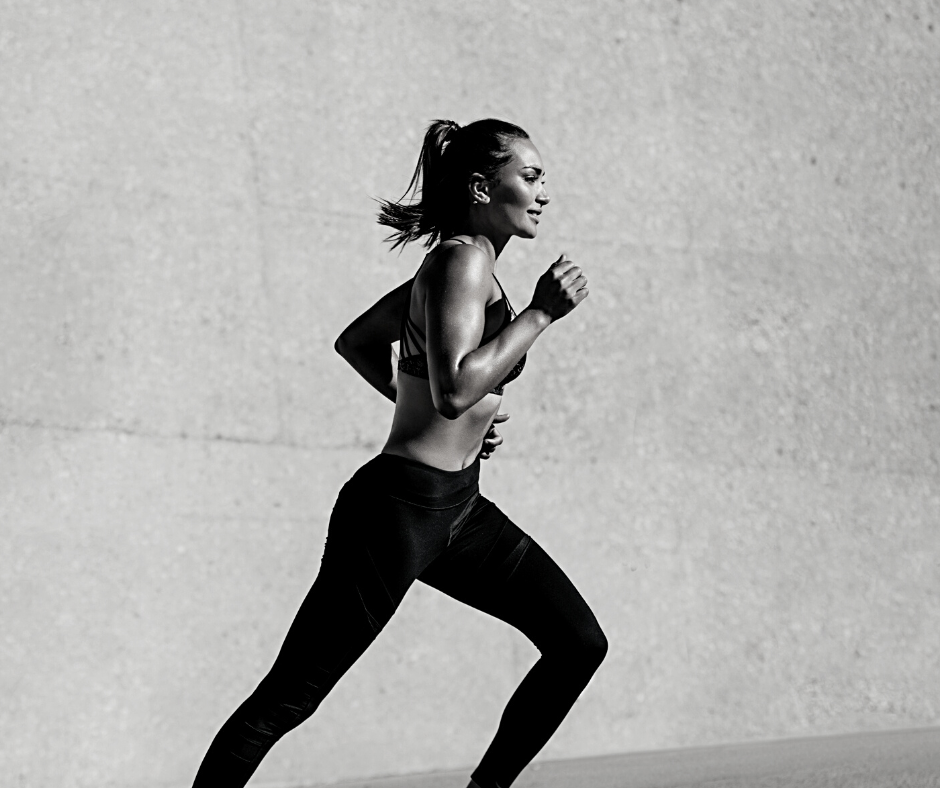
Sometimes I get the feeling that as I write and publish work more regularly, I paint a picture of myself that feels far from the truth. I sound more put together than I actually am. I sound more coherent and more sensible than I actually am. I sound like I know things – and I honestly know very little. Is this imposter syndrome? Self-doubt? Self-awareness? I don’t know that either.
This confession might sound eerily close to self-flagellation, but stick with me. I’m not on some ‘woe is me’ kick. The reason for all this angst is –
I’ve barely exercised in the last year.
I haven’t lifted weights or done any regular working-out since I found out I was pregnant. I might have done some casual pregnancy dance workouts and gone for walks. During some bits of postpartum, I did a little physiotherapy to try and heal the ab separation that plagued my life. I went on a few more walks, but that’s about it.
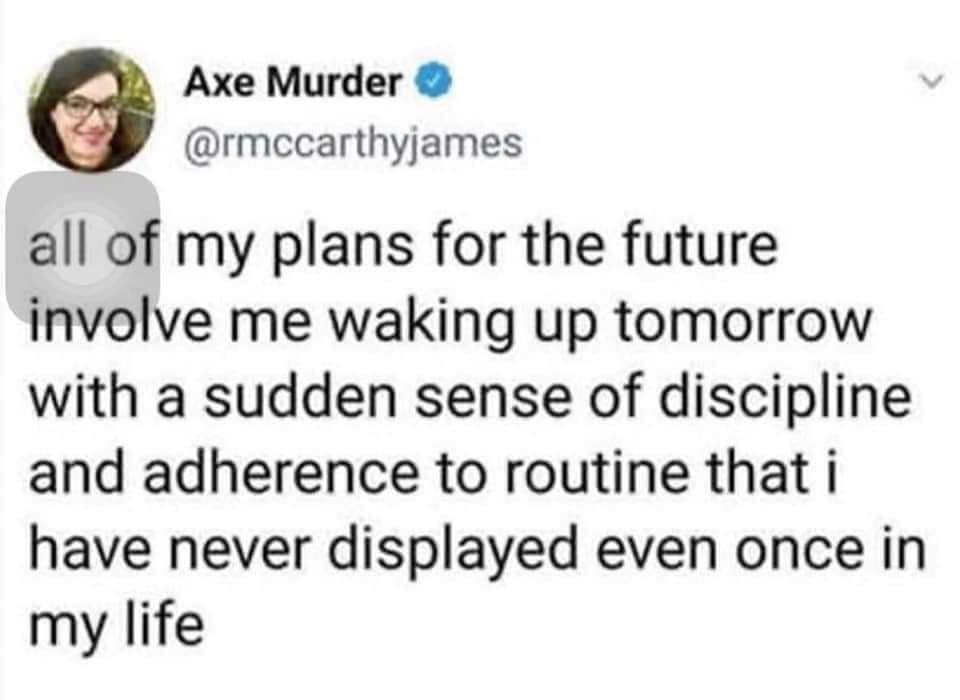
The norm is to tell moms that they’re enough and that they’re doing enough
This has nothing to do with ‘bouncing back’ or losing baby weight. My relationship with movement, fortunately, isn’t linked to aesthetics anymore. As someone that enjoyed the empowering feeling of exercise and fitness, I feel the stiff sluggishness in my body, and the tiredness from not moving enough added to the tiredness of life in general.
The idea of “starting over” and re-building muscle, momentum, and movement back into my daily practice feels overwhelming. I’ve tried it and failed many times. I start and then stop, afraid to start again, afraid to fail. The shame around this has been intense.
And it’s more than skin-deep. It’s the gnawing realization that I’m neglecting an integral part of myself. What irks me the most is the dissonance between my values and my actions. I say one thing, and do another.
Every time I face such revelations, there’s a small part of me that wants to take the easy way out. To find the nearest blanket, curl up underneath, and declare myself invisible. A lot of my writing has to do with coming face to face with my own humanity, but this is the kind that no one wants to hear about.
The humanity I usually deem ‘worth sharing’ on this blog has a powerful or uplifting ending. It’s the kind I only talk about when I’ve figured it out and emerged wiser on the other side. Like my piece on envy or my anxiety over liminal spaces.
I find myself not wanting anyone to know what I’m struggling with until I can turn that confusion into medicine for others to consume. When it becomes a lesson for me and for others is when I begin writing – as if what I have to share only matters if a motivational message is embedded into it.
Right now, I just don’t want to admit how hard it is sometimes to do the things I know I need to do for myself — to actually lift the weights, to actually engage in the 30-minute workout class, to actually make movement a core pillar of my life again. I think of how many 30-minute time slots I spend doing so many futile things.
I find myself not wanting to do physical activities with anyone because I don’t want them to see how out of sorts I truly am. I find myself afraid of my body crumbling and not living up to my expectations.
It’s embarrassing how often I think, “I should exercise today — it will help me feel good, it will nourish the parts of me that need nourishing, it is necessary” and then I don’t do it. I tried thinking of it in terms of ‘doing this for my daughter,’ but that didn’t help much either.
Starting over isn’t as easy as it sounds.
Knowing better means very little
Mere cognizance doesn’t translate into tangible action.
Knowing doesn’t always provide the impetus for change. So many things take more than just knowing. Knowing vs. Doing has long been a shame swamp for me. I know what supports my mental, physical, emotional, and spiritual health; I know what to do. Yet doing those things consistently, regularly, ritually, routinely has always been a struggle.
‘You should know better’ rings in my ears during moments or seasons when I’m far from the practices that support me — like movement. I know for a fact that regular exercise is extremely beneficial, yet I haven’t been doing it. The juxtaposition of awareness and inaction carries with it sooooo much self-judgment.
Through this process of knowing what I need (movement) but struggling to actually do it, I’ve been practicing not calling myself a garbage person. I’ve been practicing getting curious about this inertia.
Is it the annoying disappointment of starting with gusto only to realize a week later that you don’t have what it takes to persevere? Is it the embarrassment of failing? Is it the lack of willpower, given that most of my willpower is used up on caring for my daughter?
In the years that I prioritized movement, I followed a bunch of #fitspo Instagram accounts that still show up on my feed. Last week, there was a post with the caption:
“Visualize your highest self, then show up as her.”

Let’s ignore the yassified girl boss energy that it’s giving for a moment because even though I can roll my eyes at that kind of narrative, I can’t escape how it makes me feel.
I guess the best or highest self feels like a video game avatar that I’m choosing. Press X to select ‘Your Highest Self’ with a five-star rating in agility, motivation, speed, and strength.
In our efforts to stop idealizing others and what they can do for us, we have decided to start idealizing ourselves as the “best self” – a mystified and often insecurity-projected version of who we think we need to be in order to be received, heard and celebrated.
My highest self or best self does NOT feel like someone I’m choosing in compassion or curiosity. It doesn’t feel entirely human, and it doesn’t feel like me.
That’s because the notion of the ‘best’ is inherently relative. ‘Best’ needs a standard against which to be measured. ‘Best’ needs a pedestal to stand on, but it’s a shaky one. Once you’ve attained ‘best,’ where do you go next? What comes after best? How do you take part in the essential nature of growth, which requires you to be the worst at something again so that you can slowly make progress?
While I haven’t been moving a whole lot in the last ten months since having a baby, I have been learning a lot. And one thing I know a lot about is sleep regressions. Basically, when babies hit certain development milestones, their immature nervous system acts up and sleep habits go for a toss. It’s their response to all the new information they’re processing and the progress they’re making.
That’s putting it very, very pleasantly. Sleep regressions can be hell for everyone involved.
But I’ve been feeling like a baby in regression lately. Any time I look to improve myself, I’m met with inevitable moments of regression where I must grapple with my inexperience in order to move forward.
I’ve been tending to the parts of me that feel like a failure for not looking the way I used to, for the changes my body has held and endured. I’ve been tending to my inability to feel as strong as I’d hoped after pregnancy and a C-Section, and to my ongoing battle of trying to do the things I know would help.
I’ve also been staying close to the impulse to move and seeing if I can do it in small increments, like spending more time standing instead of sitting, walking around the house instead of being on the couch, dancing with my daughter instead of thinking I must go from zero to a high-impact sweat session.
I’ve been facing the process instead of the outcome. I’ve allowed myself to confront the vulnerability of something being within my reach yet feeling unreachable. I’m confronting my fear of not being able to commit to doing the things I know I ought to do because of my stupid inability to suck at something.
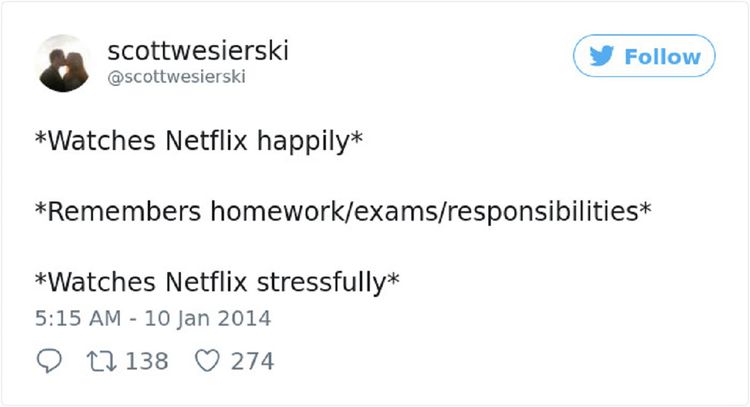
I’m not my best self
I can’t stand to rename my inner critic again – to pick another impossible metric to model myself after and call it self-improvement. I’m not my best self. I’m whatever the day and season requires me to be.
A chosen self is someone you decide is enough for the day. It’s not the person you swim against the tide to get away from. That feels like something closer to how I see myself right now. It’s stepping back from labeling every aspect of my growth as ‘good’ or ‘bad,’ ‘light’ or ‘shadow.’
My chosen self often feels like I’m awkwardly swaying between two realities: one where I mourn missed opportunities to do and be better, and another where I embrace the chance to reinvent myself and start over. I can’t figure out how to balance between the two, so I’m gonna just try to remain dignified in the midst of it.
We will go through phases of stagnancy. I think we spend a lot more of our lives stagnant than we realize or acknowledge. We’re notorious for showering tons of meaning and insight and celebration on our winning seasons, but when the pendulum swings the other way and bulldozes our little party, we’re reminded that it doesn’t behoove anyone to spend all their time obsessing over their ‘best selves.’
I’ve always wanted to say behoove. That was special. 🥹🥹
Your best self is an illusion, and illusions don’t require – or rather, don’t allow – reciprocity, care, or growth. There’s no point chasing this superhero version of ourselves if it may not exist, or worse, if there’s no need for it. The best self is our projection of a reality where we won’t fail or flounder again, and the only place that kind of ‘best’ exists is in death.
My future self?
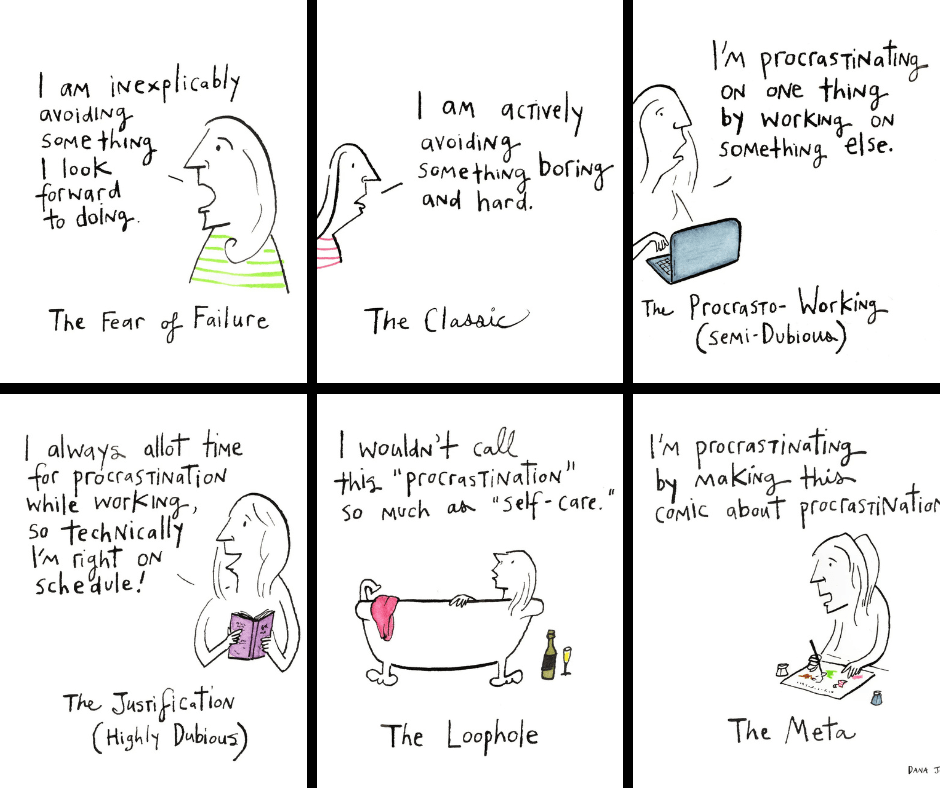
Great, who is she? This section is about procrastination. There’s an insightful article in The New York Times that unpacks why procrastination has nothing to do with self-control. “We must realize that, at its core, procrastination is about emotions, not productivity. The solution doesn’t involve downloading a time management app or learning new strategies for self-control. It has to do with managing our emotions in a new way,” says author Erik Winkowski.
It’s the self-awareness that causes us to feel so crappy about procrastinating. We’re not only aware that we’re avoiding the things we ought to do, but we also live with the burden of knowing that avoidance is a bad idea. But, we do it anyway.
Why? Cuz of our darned emotions, apparently.
Procrastination, in essence, is our emotional getaway car. When doing the thing (exercise, homework, sending that email, cleaning that room, making that appointment) makes us feel overwhelmed, insecure, or just plain irritable, instead of managing those uncomfortable feelings, we delay the task.
“Procrastination is a perfect example of present bias, our hard-wired tendency to prioritize short-term needs ahead of long-term ones,” writes Winkowski. The article says that evolution is to blame for this tendency.
Our ancestors, in their quest for survival, weren’t equipped to prioritize the distant future. They were attuned to the now: the need to find today’s meal, or the urgency of immediate threats. Fast forward to today, this evolutionary blueprint still affects our perceptions and actions.
Like our imaginary ‘best self’ it’s worth meeting another stranger: Our future self. When faced with tasks, responsibilities, or decisions that have long-term implications, our brains often perceive our future selves as a completely new person—almost like a distant relative or even a stranger.
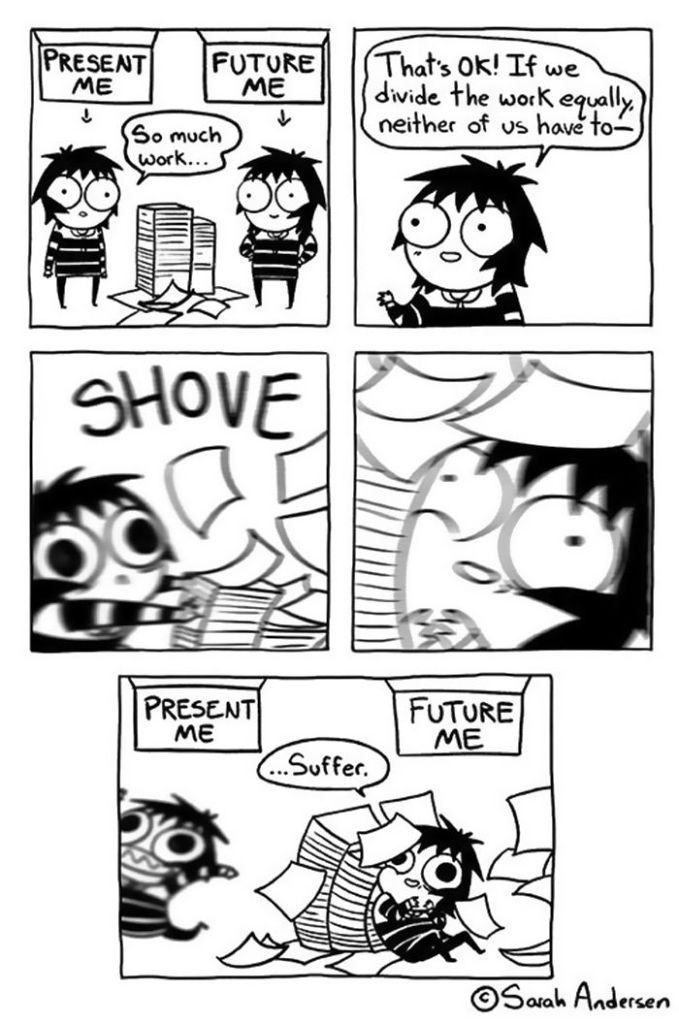
When we put off a task to another day, on a subconscious level, we’re not actually passing it to our future ‘selves’. We’re delegating it to someone else entirely. Let the stranger handle it.
This detachment from our future self makes the burdens, anxieties, and negative repercussions of our delays feel externalized. We convince ourselves, “It’s Next-Monday-Sonia’s problem.”
I’d say procrastination is basically like being a shitty colleague to our future self. Dumping things on their plate with no warning, going on leave with no notice, and being an all-round slob. To confront procrastination, it requires us to build a bridge of empathy and connection to our future selves.
I’ve been trying to imagine my future self as someone I work with (I’m generally nice to my coworkers). I’d want to help them, to be kind to them, not to be a doormat, but to be respectful. Let’s hope that accomplishes something good.
A healthy push vs. a shame-filled demand
Finding the delicate boundary between a friendly nudge and a full-blown guilt trip is a bit like trying to feed a toddler. Things get sticky. While you may start out patient, gentle, and kind – the frustration, tiredness, and desperation for things to be less hard can quickly turn a healthy push into a theatrical, guilt-laden demand.
So I return to practice: practicing softness paired with the healthy necessary push. Practicing slow and steady paired with the healthy necessary push. Practicing sustainable action paired with the healthy necessary push. Practicing curiosity but with the HNP. Practicing compassion but with the HNP.
And I’m letting the practice be imperfect. I don’t yet have a plan to move forward. I don’t have a workout plan that I can tell you I’m starting next week. I have nothing but the same angst over my current state that I started this essay with.
Motherhood has taught me a bunch of things, but one of them is to have space for inconsistency. I often describe myself as flakey these days because that’s the season I’m in. Not the forget-your-birthday kind of flakey, but the sophisticated French pastry kind of flakey. I have to give myself some space for the unpredictable nature of raising a baby.
Maybe I’ll figure out a way forward soon. That would be wonderful.
I’ll end with this reminder to myself and perhaps to you: You will forever need to practice starting over. You’ll always find yourself at the threshold of picking up stuff that you accidentally dropped, postponed, or ditched prematurely.
Maybe starting over, having to go back to the beginning, and having to stand at the bottom of the mountain looking up with no idea how you’ll get to the top doesn’t mean you’re broken or incapable or lazy. Maybe it just means that life gets in the way sometimes.
I wish I had the answers.
If you’ve had some success with this or some insight to share, write to me please?


Leave a comment