I turned 30 a couple of weeks ago.
I launched this blog around the tail-end of 29. That’s why a lot of the themes I’ve talked about so far have to do with age and life experiences, with a sprinkling of existentialism because why the hell not.
One of my cherished hobbies is to blindside unsuspecting people with this question: How old are you in your head?
When doing some reading for this essay, I learned that it’s a concept called subjective age. How old someone is in their mind. Not how old they feel, but how old they truly think they are before they need a little reality check.
The responses I get from people are generally pretty diverse, with a clear preference: most people perceive themselves as younger than their biological age. This ‘age gap’ so to speak, varies more dramatically as people get older. I remember asking my 90-year-old grandfather this question a couple of years ago, and without batting an eyelid, he told me he was in his forties.
I wasn’t in the least bit startled at the fact that his mind operates like he’s fifty years younger than his actual age because I’ve seen it. It’s both remarkable and inspiring to me.
Up until I turned 30, I’ve pretty much always felt my age. Maybe a year or so younger, but rarely has there been any astounding difference between the age I am in my mind and the age I am in my body.
Why do we even know the answer to this?
What I find cool is how immediately and readily people are able to answer this very abstract question. I’ve never had to explain the context. I’ve never had to clarify what I mean. People almost always have an answer within seconds.
It’s puzzling to me that age is one of those changing, yet unchangeable aspects of ourselves, much like our height or skin color but it’s not as if we’re walking around asking each other, “What’s your mental shoe size? Are you feeling a size 9 today?” or “In your heart of hearts, do you feel more like a blonde with blue eyes?”
Clearly, our relationship with our age is a different beast altogether.
When I found out about the term subjective aging, I also found a bunch of scientific studies on the subject, each more boring than the one before. Most of them had the basic premise: If you feel older than your actual age, you’re probably less healthy too and possible that you’re depressed and gonna die very soon tick tock tick tock (Follow me for more joyfully uplifting interpretations of scientific research).
The only outlier was a study from 2006, conducted in Denmark – a place where the data is so clean and pristine that you can almost taste it. The researchers found a few interesting things. First, adults over 40 perceived themselves to be approximately 20 percent younger than their actual age.
Secondly, the research uncovered that the magical fulcrum of age perception is 25 years old. Meaning, respondents younger than 25 feel older, and those older than 25 feel younger. That’s probably why many people I know (myself included) have had some colorful meltdowns on their 25th birthday.
Age is weird, memory is weirder still
Youth plays some powerful tricks on us. Adolescence and young adulthood are particularly potent periods of our lives. It’s like your brain is extra spongy and your senses are extra sensy. Everything is a first. Everything is dramatic, exciting, and heady. Feelings are intense, all the time. About everything.
Memories from your formative years seem to occupy the penthouse suite of your mind. It’s a phenomenon called the reminiscence bump. It’s why at 2 am, when the house party lull hits and everyone gets into their feelings, your playlist will switch to music from that period of your life.
So when you say at 30 that you feel 25, you are not lying and you are not flattering yourself. You are reporting the timestamp on your last major identity update.
Spend an actual hour with an actual real-life anxiety-riddled, angsty-as-heck 25-year-old, and you WILL want to revise your answer pretty quickly.
36 will be the happiest year of your life
I went looking for some external reassurance about getting older, and I am pleased to report that science has come through. Several large surveys across the US, UK, and Germany have asked people what age they would be if they could be any age forever, and the most common answer is 36. Mid-thirties, broadly. Statistically, the happiest stretch of human life is the one I am about to walk into. Woohooooo.
The researchers have a name for the period between 30 and 45. They call it “established adulthood,” which sounds like the most un-fun party theme in the world. One 36-year-old respondent in the study described it as “having put together a machine that’s finally got all the parts it needs” which is either the most reassuring sentence I have ever read or the most depressing one, depending on how I feel about being a machine in that moment.
There is also a separate meta-analysis of 460,000 people that found life satisfaction actually keeps slowly rising until around age 70 before declining again, which I’m ignoring on the grounds that it is none of my business yet.
The saga of the eyebrows
My all-time favorite YouTube channel is VSauce. In one of their videos called ‘Did People Used to Look Older’, the host, Michael, unpacks this incredible concept that I will never ever ever ever forget: Back in the day, people used to look older than their actual age.


Here’s why we think people look older than their actual age when we look at pictures from when they were young:
The reason this happens, according to Michael and now also me, is that every generation comes of age during a particular aesthetic phase or era. The lingo, their way of dressing, hairstyles, beauty standards, and overall vibes.
For e.g. from the late 80s until about 2008, it was attractive for women to have thin eyebrows. So everyone dutifully plucked their eyebrows into oblivion and then, very importantly, kept them that way for the rest of their lives.
This is why you know multiple women in their 50s walking around with the same eyebrows they had in college.

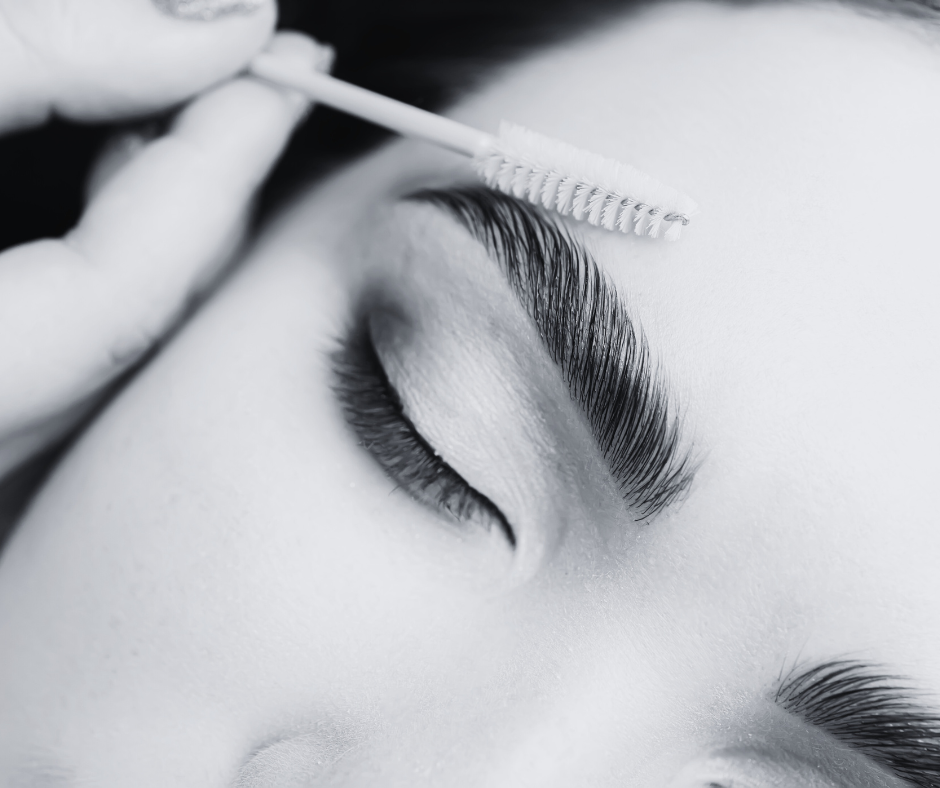
Then 2010 happened. Instagram arrived and decided thick eyebrows were in. Over-plucking became a punishable offence in every state in America. People born in the 90s like me stopped the excessive eyebrow threading (praise the lord!!!!) Thin eyebrows were banished to the cultural attic, where they were presumably seated next to low-rise jeans and side partings.

Which means that when we encounter thin eyebrows or something that used to be popular back in the day, our brains do a small calculation and conclude: old.

You decide when to get off the trendmill
The takeaway from all of this, which I find genuinely useful, is that people keep up with the trends of the day when they are young, and then at some point in their lives they decide to get off the trend treadmill. The trendmill, if you will. We settle on a version of ourselves, look around, decide we like it, and stay that way.
We say, okay, I’m good. I like this person. I like these bell-bottoms. I like my Princess Diana hair. I like saying “eXcUsé möi” instead of excuse me. I like blue eyeshadow. This is my stop, I’m getting off here.
And then time keeps moving without consulting us. Jeans go from low-waist to high-waist to baggy jeans to boyfriend jeans to ex-boyfriend to we-need-to-talk jeans. Pouty lips come in and go out. Ideal body types go from heroin-chic to bootylicious to whatever the algorithm has decided we’re doing now. What was once a young-person thing becomes an old-person thing.
What I find interesting is that this implies a choice. You get to decide when to stop updating, and which bits to take with you. Most people don’t realise this is a decision they’re making. They experience it as taste. They ‘just like’ the music of their late teens, they ‘just prefer’ the way they did their hair in 2008. But taste is what you reach for.
The pile
The harder question is what getting off the trendmill actually costs you.
Updating is exhausting, and most of what you would be updating to is frankly not worth the effort. Nobody is required to learn what delulu means. There’s nothing wrong with deciding you’re done.
But there IS something that happens over time almost as a byproduct. The person who says “Nirvana is the greatest band ever and today’s music is rubbish” is a few short steps from the person who says “kids these days,” which is a few more steps from the person who finds the present culture genuinely incomprehensible and has made peace with that fact. Of all the years that human beings have been making art, the best one just hAPPeNed to be the years you were in college? What are the odds.
(Side note: I do think a lot of the best music ever made was made decades ago, and I will defend this position at parties. Lots of rubbish was made back then too, but some songs from the past have stood the test of time. Some songs being made right now amidst the rubbish will too, and I’m probably not gonna know which ones those are.)
This is the part nobody mentions about getting old, possibly because it’s unflattering to admit. The cultural part of ageing, the trendmill part, the part where you become a dinosaur to anyone who arrived after you, is mostly the accumulation of small opt-outs you made without thinking of them as opt-outs. Each one is reasonable on its own. It’s the pile that does the damage.
The eyebrows and the jeans and the music are just the visible part. The real decision is whether you’re still willing to change your mind. About anything. About what makes a good life, about who you want to spend time with, about what you believe, about what you want.
Most of what I currently think, I’ll probably think differently in ten years. The version of me at 50 will almost certainly find some of my current convictions a bit embarrassing. I would like to let her.
I’d like to stay the kind of person who can be talked out of things and stay flexible. I want to enjoy the stuff my kids do.
This is harder than it sounds, because at some point staying open starts to feel like not knowing who you are. And not knowing who you are, past a certain age, is supposed to be a problem.
I’m not sure it is. Happy 30s to me.

Leave a Reply